


Propylphenidate is a synthetic stimulant compound that belongs to the piperidine chemical family, closely related to well-known medications used for attention and wakefulness disorders. In scientific discussions, propylphenidate is often categorized as a research chemical due to its limited medical approval and the lack of large-scale clinical studies. It is structurally similar to methylphenidate, a prescription medication commonly used for ADHD, but small changes in its molecular structure can significantly alter how it interacts with the brain and nervous system. Because of this, propylphenidate has gained attention among researchers studying dopamine reuptake inhibition and stimulant pharmacology.
In recent years, propylphenidate has appeared in discussions about novel psychoactive substances, particularly within forensic and toxicology studies. While it is not widely approved for medical use, it is important to understand how it works, what risks it may carry, and why scientists remain cautious about compounds like this. The interest in propylphenidate also reflects a broader scientific curiosity about how small chemical modifications can lead to different potency, duration, and side-effect profiles compared to established stimulant medications. However, because human research is limited, much of what is known about propylphenidate comes from laboratory studies and indirect pharmacological analysis rather than clinical trials.
This article explores propylphenidate in depth, covering its chemistry, mechanism of action, potential effects, safety concerns, and its role in modern research. The goal is to provide clear, educational information for readers who want to understand this compound from a scientific and harm-aware perspective.
Chemical Structure and Scientific Background of Propylphenidate
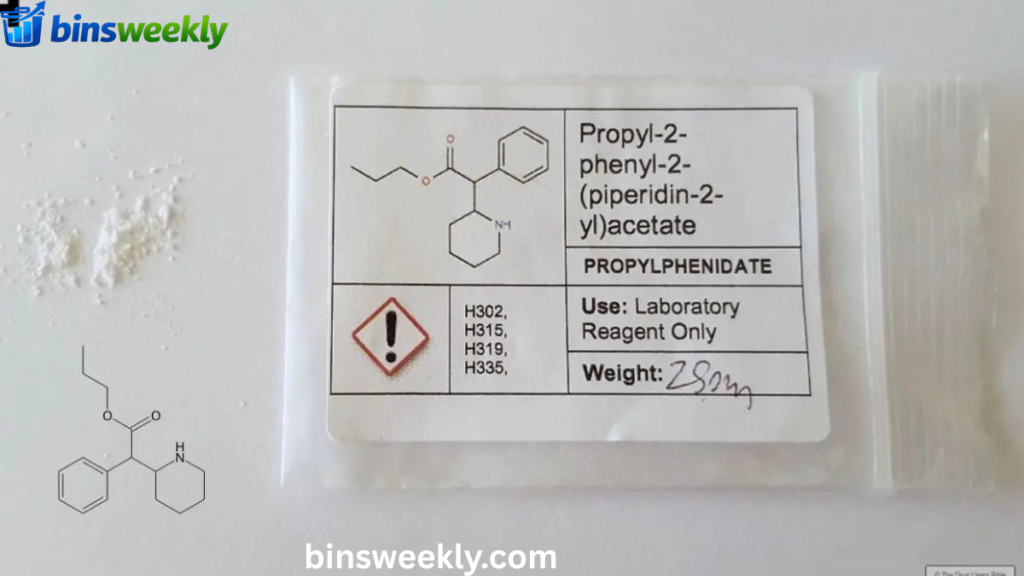
Propylphenidate is part of the phenidate family, which includes compounds designed to interact with dopamine transporters in the brain. Structurally, it is derived from piperidine-based molecules and shares similarities with methylphenidate, but with a propyl group modification. This small structural change may seem minor, but in pharmacology, even a single carbon chain difference can alter how a compound binds to receptors, how quickly it is metabolized, and how long it remains active in the body.
From a chemical standpoint, propylphenidate acts primarily as a dopamine reuptake inhibitor. This means it influences the brain’s dopamine system by preventing the reabsorption of dopamine into neurons, thereby increasing its availability in synaptic spaces. Dopamine is a neurotransmitter associated with motivation, focus, and reward processing. Because of this mechanism, compounds like propylphenidate are studied for their stimulant-like properties, although their safety profiles remain uncertain without clinical validation.
In laboratory settings, propylphenidate is often examined alongside other phenidate analogs to compare binding affinity and potency. Researchers are particularly interested in how slight molecular changes affect transporter selectivity. While methylphenidate is well-researched and prescribed in many countries, propylphenidate remains largely experimental. This distinction is important because it highlights the gap between medically approved stimulants and emerging analogs that have not undergone rigorous testing.
Overall, propylphenidate represents a useful example in pharmacological research, helping scientists better understand how dopamine-related compounds interact with the central nervous system. However, its lack of medical approval also means that its full risk profile is not yet well established.
How Propylphenidate Affects the Brain and Nervous System
The primary action of propylphenidate involves dopamine reuptake inhibition, which increases dopamine signaling in the brain. This mechanism is similar to other stimulant-type compounds, but subtle differences in molecular structure can influence how strongly and how long the effect lasts. In general, compounds in the phenidate class are known to affect brain regions associated with attention, executive function, and reward pathways.
When discussing propylphenidate, researchers often focus on its interaction with dopamine transporters (DAT). By blocking these transporters, the compound increases dopamine concentration in synapses, which can alter cognitive processing and alertness. However, without controlled human trials, the exact psychological and physiological effects remain uncertain. Animal and in vitro studies provide some insights, but they cannot fully predict human response.
Another important aspect is how propylphenidate may influence norepinephrine systems. Many stimulant compounds have dual effects on dopamine and norepinephrine pathways, contributing to increased arousal and focus. However, the balance between these effects varies widely between compounds, and propylphenidate’s profile is still not fully mapped.
It is also important to note that any stimulant-like compound affecting dopamine pathways carries potential risks, especially when studied outside controlled medical environments. Changes in dopamine signaling can influence mood regulation, sleep patterns, and cardiovascular activity. Because of these uncertainties, scientists emphasize caution when interpreting early research on compounds like propylphenidate.
Potential Effects, Risks, and Safety Concerns
The effects associated with propylphenidate are primarily inferred from its pharmacological class rather than confirmed clinical trials. As a dopamine reuptake inhibitor, it may produce stimulant-like outcomes such as increased alertness or focus in experimental settings. However, the intensity and duration of these effects are not well documented in humans.
One of the main concerns with propylphenidate is the lack of safety data. Without controlled studies, it is difficult to determine appropriate exposure levels, long-term effects, or potential toxicity. This makes it significantly different from approved medications like methylphenidate, which have undergone extensive testing and regulation.
Another important risk area involves cardiovascular and neurological effects. Stimulant-type compounds can potentially influence heart rate, blood pressure, and sleep cycles. In addition, altering dopamine systems without medical supervision may lead to unpredictable psychological responses. Because of this, propylphenidate is generally considered a research-only substance in scientific literature.
From a regulatory standpoint, many countries monitor or restrict compounds like propylphenidate due to their structural similarity to controlled stimulants. This is part of broader efforts to manage novel psychoactive substances that appear in research or illicit markets. However, regulation varies by jurisdiction, and scientific classification may differ from legal classification.
Overall, the main takeaway is that propylphenidate remains insufficiently studied for any practical or medical application, and its safety profile is not fully understood.
Scientific Research and Comparisons with Similar Compounds
In pharmacological research, propylphenidate is often compared to other phenidate analogs such as methylphenidate and ethylphenidate. These comparisons help scientists understand how small chemical changes influence potency and receptor binding. Methylphenidate, for example, is a well-established medication with known therapeutic uses, while propylphenidate remains largely experimental.
One key area of research involves dopamine transporter affinity. Studies typically evaluate how strongly different compounds bind to DAT proteins and how effectively they inhibit dopamine reuptake. Propylphenidate is of interest because modifications in its alkyl chain may change both binding strength and duration of action.
Another research focus is metabolic stability. Different phenidate analogs are broken down at different rates in the body, which affects how long they remain active. Understanding these differences helps researchers predict how structural changes influence pharmacokinetics. However, because propylphenidate has not been widely studied in humans, most of this information remains theoretical or based on laboratory models.
Researchers also examine how compounds like propylphenidate can contribute to the broader understanding of stimulant mechanisms. Even if a compound is not developed into a medication, it can still provide valuable insight into brain chemistry and drug-receptor interactions.
Legal Status and Global Perspective on Propylphenidate
The legal status of propylphenidate varies depending on the country and its regulatory framework for psychoactive substances. In many regions, it is not explicitly approved for medical use and may fall under analog or psychoactive substance regulations due to its similarity to controlled stimulants.
Some countries classify substances like propylphenidate under “research chemical” categories, meaning they are not approved for consumption or therapeutic use but may be used in controlled laboratory research. Other jurisdictions may regulate it more strictly, especially if it is considered structurally similar to prescription stimulants.
It is also important to understand that legal classification does not always reflect scientific understanding. A compound may be legal in one region but still lack safety or efficacy data. This creates a gap between regulatory policy and pharmacological research, which is why scientists emphasize caution when interpreting availability.
Overall, propylphenidate exists in a regulatory gray area in many parts of the world, reinforcing the need for careful scientific evaluation and clear legal frameworks.
Conclusion
Propylphenidate is an interesting example of how small chemical modifications can create entirely new stimulant-like compounds with uncertain properties. While it shares structural similarities with medically approved medications, its effects, safety, and long-term impact are not well understood. This makes propylphenidate primarily a subject of scientific research rather than clinical application.
As research continues, compounds like propylphenidate help scientists better understand dopamine systems and how subtle molecular changes affect brain chemistry. However, without controlled studies, its risks remain largely unknown, and caution is strongly emphasized in scientific literature.
FAQs
What is propylphenidate?
It is a synthetic stimulant-like research compound related to methylphenidate.
Is propylphenidate approved for medical use?
No, it is not approved as a medical medication.
How does propylphenidate work?
It mainly inhibits dopamine reuptake in the brain.
Is propylphenidate safe?
Its safety is not well established due to limited human research.
Why is propylphenidate studied?
It helps researchers understand dopamine transporter activity and stimulant mechanisms.
Is propylphenidate legal everywhere?
No, its legal status varies by country and region.
How is it different from methylphenidate?
It has a modified chemical structure that may change potency and duration.
Can propylphenidate be used clinically?
Currently, it has no approved clinical applications.