

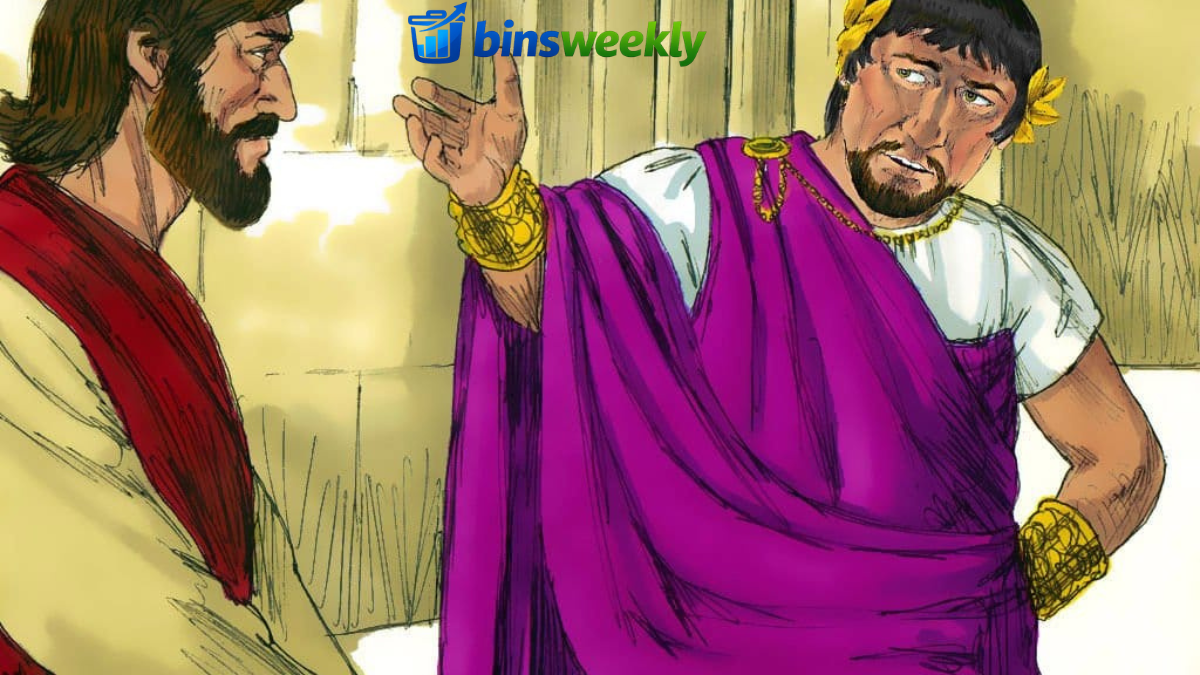
Pontius Pilate stands as one of the most debated figures in ancient history, primarily because of his role in the trial and crucifixion of Jesus Christ. As the Roman prefect of Judea from 26 to 36 AD, Pontius Pilate operated in a politically unstable province where Roman authority often clashed with Jewish religious leadership. His name has become permanently linked with one of the most significant events in Christian theology, making him both a historical and symbolic figure.
What makes Pilate especially intriguing is the contrast between his political power and his apparent hesitation during the trial of Jesus. While Roman governors were expected to enforce order decisively, biblical accounts portray Pilate as conflicted, pressured, and uncertain. This duality has fueled centuries of debate among historians, theologians, and scholars. Was he a ruthless Roman administrator simply following protocol, or a reluctant judge caught in a situation beyond his control? Understanding his story requires examining both historical records and religious texts.
Historical Background of Pontius Pilate
Pontius Pilate likely came from the Roman equestrian class, a social rank that often supplied provincial governors for the empire. Though exact details of his early life remain unclear, historians suggest he was trained in Roman military and administrative systems. His appointment as prefect of Judea placed him in charge of a difficult and politically sensitive region under Emperor Tiberius. Judea was known for frequent unrest, religious tensions, and resistance to Roman taxation and authority.
As prefect, Pilate’s responsibilities included maintaining order, collecting taxes, overseeing legal matters, and ensuring loyalty to Rome. Judea was unlike many other Roman provinces because of its strong religious identity and expectations of autonomy. This made governance extremely challenging, especially for an outsider with limited understanding of local customs. Pilate’s arrival in 26 AD marked the beginning of a decade-long administration that would later become infamous due to its association with the trial of Jesus.
Historical sources suggest that Pilate was often rigid in enforcing Roman policies, which sometimes led to conflict with the local population. His governance style appears to have prioritized Roman authority over cultural sensitivity, a factor that contributed to multiple uprisings during his rule.
Pontius Pilate’s Rule in Judea
During his administration, Pilate faced continuous friction with Jewish leaders and the general population. One of the main sources of conflict was his introduction of Roman standards bearing the image of the emperor into Jerusalem, which was considered offensive to Jewish religious laws. This act triggered protests and forced Pilate to eventually remove the standards to avoid widespread rebellion.
Another significant issue was taxation and financial administration, which often placed heavy burdens on local communities. Pilate also used temple funds for infrastructure projects, including the construction of an aqueduct in Jerusalem. While these projects benefited the city, they were seen by many Jews as violations of sacred resources. These decisions contributed to growing resentment toward Roman rule and Pilate’s leadership.
Despite his strict policies, Pilate managed to maintain Roman control over Judea for approximately ten years, which suggests a degree of political effectiveness. However, his tenure was repeatedly marked by unrest, indicating that his governance style may have prioritized authority over diplomacy. Ancient historians, particularly Jewish sources like Josephus, describe him as harsh and occasionally insensitive to local traditions, though interpretations vary depending on the source.
The Trial of Jesus Christ
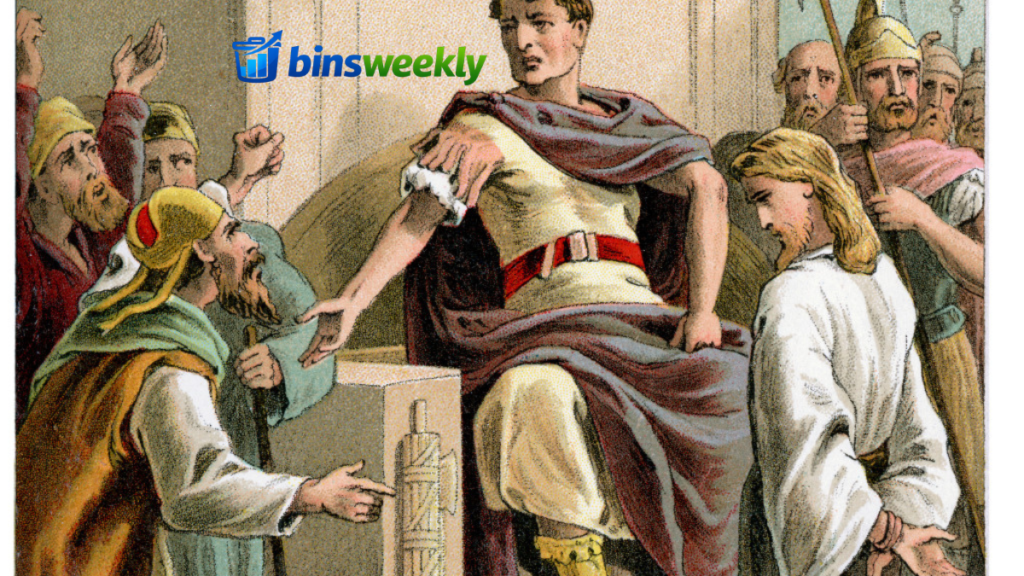
The most significant event associated with Pilate is the trial of Jesus of Nazareth. According to the Gospels, Jesus was brought before Pilate by Jewish religious authorities who accused him of claiming to be the “King of the Jews,” a charge interpreted as political rebellion against Roman rule. Pilate’s role was to determine whether this accusation warranted execution under Roman law.
Biblical accounts portray Pilate as uncertain about Jesus’ guilt. He questions Jesus, finds no clear evidence of political threat, and even attempts to release him. However, due to mounting pressure from the crowd and religious leaders, Pilate ultimately authorizes crucifixion. One of the most symbolic moments in the narrative is Pilate “washing his hands,” signaling his attempt to distance himself from responsibility for the decision.
Different Gospel writers present Pilate in slightly varying ways—some emphasize his reluctance, while others highlight his political pragmatism. Regardless of interpretation, the event firmly establishes Pilate as the official who sanctioned Jesus’ death, making him a central figure in Christian tradition.
Pontius Pilate in Historical and Religious Sources
The image of Pontius Pilate differs significantly depending on the source. In the New Testament, he is portrayed as a conflicted authority figure torn between justice and political pressure. In contrast, Roman and Jewish historians provide a more administrative and political perspective. The Jewish historian Josephus describes Pilate as inflexible and occasionally brutal, while Roman historian Tacitus briefly confirms the execution of Jesus under Pilate’s governance.
These differing accounts highlight the challenge of separating historical fact from theological interpretation. Early Christian writings emphasize Pilate’s hesitation, possibly to shift greater responsibility onto other groups involved in the trial. Meanwhile, Roman records focus more on governance and legal authority, with little emotional or moral commentary.
The combination of these sources creates a complex and sometimes contradictory portrait of Pilate. He is simultaneously a Roman official enforcing imperial law and a symbolic figure representing moral conflict. This dual identity has made him a subject of ongoing scholarly analysis for centuries.
Archaeological Evidence and Historical Verification
One of the most important archaeological discoveries related to Pilate is the “Pilate Stone,” found in Caesarea in 1961. This inscription confirms his official title as Prefect of Judea and provides direct evidence of his historical existence. It is one of the few physical artifacts linking a biblical figure to Roman administrative records.
The discovery of this inscription strengthened the historical credibility of Pilate’s role in Judea and helped scholars better understand Roman governance in the region. While the stone does not provide details about Jesus or the trial, it confirms that Pilate was indeed a Roman official stationed in Judea during the correct time period.
Despite this evidence, much about Pilate’s life remains unknown. There are no surviving personal writings, and Roman records of provincial governors were often limited. As a result, historians must rely on indirect sources, including religious texts and secondary historical accounts, to reconstruct his biography.
Fate, Legacy, and Historical Debate
The later life of Pontius Pilate is uncertain. Some historical traditions suggest he was recalled to Rome after complaints from local populations, while others claim he was exiled or died by suicide. However, no definitive Roman record confirms his fate, leaving the end of his life open to speculation.
Over time, Pilate’s legacy evolved significantly. In Christian tradition, he became a symbol of moral hesitation and political compromise. In historical scholarship, he is viewed more as a Roman administrator operating under difficult circumstances. His role in the crucifixion of Jesus ensured that his name would remain central in religious discussions for centuries.
Today, Pilate continues to be studied not only as a historical figure but also as a symbol of the complex relationship between power, justice, and responsibility. His story reflects the challenges of governance in a divided society and the difficult choices faced by those in authority.
Conclusion
Pontius Pilate remains one of history’s most fascinating and controversial figures. As the Roman prefect of Judea, Pontius Pilate played a decisive role in an event that shaped global religious history. Whether viewed through the lens of history or theology, his actions during the trial of Jesus continue to inspire debate and interpretation.
His legacy is a mixture of political authority, moral ambiguity, and historical mystery. More than two thousand years later, Pilate’s story still raises questions about justice, leadership, and the burden of decision-making under pressure.