

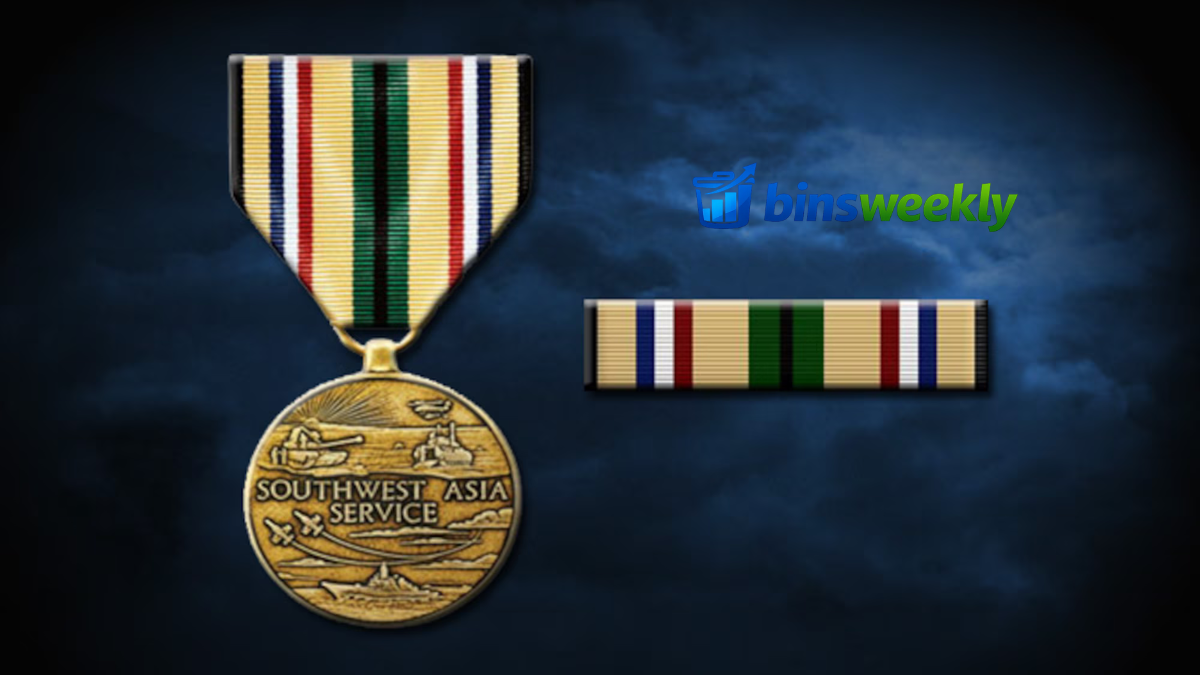
The Southwest Asia Service Medal is one of the most significant U.S. military awards created to honor service members who participated in operations linked to the Gulf War era. Established to recognize dedication during a critical period in modern military history, this medal represents service in Southwest Asia between 1990 and 1995. It was introduced to formally acknowledge the efforts of troops involved in Operations Desert Shield and Desert Storm, as well as related missions in the region. The medal is not only a symbol of military achievement but also a reminder of international cooperation and strategic defense efforts during a turbulent geopolitical time.
The creation of the Southwest Asia Service Medal marked a turning point in how the U.S. military recognized operational service in specific conflict zones. Unlike traditional combat awards, this medal was designed to honor participation in a broader range of military activities, including support roles, logistics, air operations, and naval deployments. Many service members who never engaged in direct combat still contributed significantly to mission success and stability in the region. This inclusive recognition helped ensure that all eligible personnel received appropriate acknowledgment for their contributions.
Historically, the Gulf War represented a major shift in modern warfare, with advanced technology, coalition forces, and rapid deployment strategies. The Southwest Asia Service Medal captures this evolution by serving as a permanent record of participation in a landmark military campaign. For veterans and their families, it holds emotional significance, symbolizing sacrifice, duty, and commitment to national and global security.
Historical Background and Eligibility Criteria of the Southwest Asia Service Medal
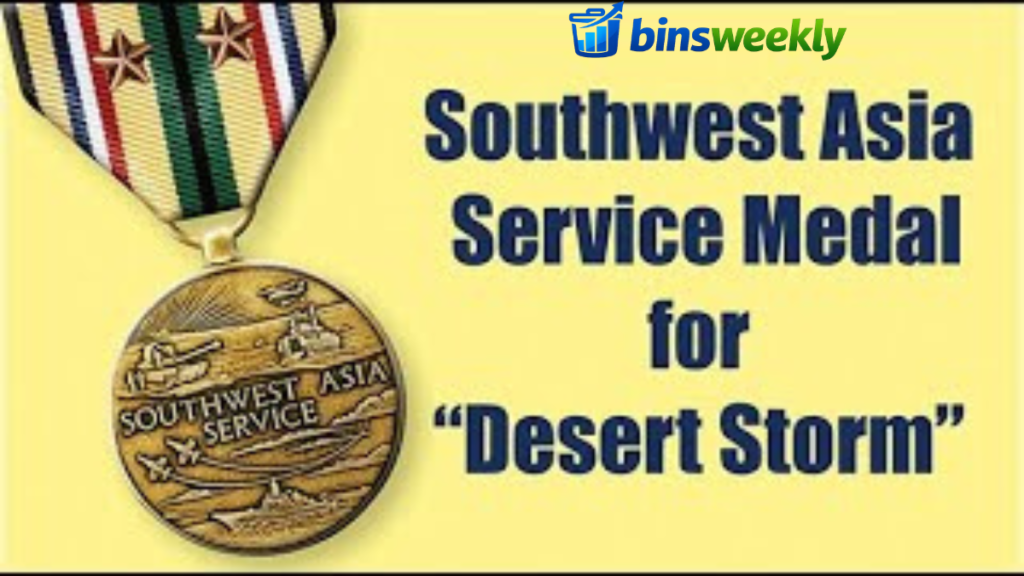
The Southwest Asia Service Medal was officially established by the United States Department of Defense in 1991, during the height of the Gulf War. Its creation was directly tied to Operations Desert Shield and Desert Storm, which were launched in response to Iraq’s invasion of Kuwait in 1990. The medal covers service performed in designated geographic areas of Southwest Asia, including Iraq, Kuwait, Saudi Arabia, Oman, Bahrain, Qatar, and surrounding waters of the Persian Gulf, Red Sea, and Arabian Sea. This wide operational scope reflects the multinational nature of the conflict and the strategic importance of the region during that period.
Eligibility for the Southwest Asia Service Medal is based on specific criteria defined by military regulations. Service members must have been deployed to or supported operations in the designated area between August 2, 1990, and November 30, 1995. The required duration of service varies depending on assignment type, but generally includes a minimum period of continuous or cumulative presence in the operational theater. Personnel from all branches of the U.S. Armed Forces, including the Army, Navy, Air Force, Marine Corps, and Coast Guard, may qualify if they meet the established requirements.
In addition to geographic and time-based eligibility, participation in approved military operations is essential. This includes direct combat roles, air missions, naval support, and logistical operations that contributed to mission success. Even non-combat personnel stationed in support zones may qualify if their duties were directly linked to operational objectives. This broad eligibility framework ensures that the medal recognizes the full spectrum of military involvement during the Gulf War era.
Design, Symbolism, and Campaigns of the Southwest Asia Service Medal
The design of the Southwest Asia Service Medal carries deep symbolic meaning that reflects the nature of military operations in the region. The medal typically features imagery associated with desert warfare and coalition efforts, representing unity among allied nations. The ribbon is distinguished by a combination of colors that symbolize courage, sacrifice, and the harsh environmental conditions faced by service members during deployment. Each visual element of the medal was carefully chosen to reflect both the physical and emotional challenges of service in Southwest Asia.
One of the most important features of the medal is the use of campaign stars, which are attached to the ribbon to indicate participation in specific phases of military operations. These stars represent involvement in key campaigns such as the defense of Saudi Arabia, the liberation of Kuwait, and the ceasefire and post-conflict stabilization efforts. Each star adds a layer of recognition, highlighting the breadth of a service member’s operational experience. This system allows the medal to reflect not only presence in the region but also active participation in multiple stages of the conflict.
The campaigns associated with the Southwest Asia Service Medal include Operation Desert Shield, which focused on defensive military buildup, and Operation Desert Storm, which involved active combat operations to liberate Kuwait. Additional post-war operations ensured regional stability and enforcement of ceasefire agreements. These campaigns involved coordinated efforts across land, air, and sea forces, supported by an international coalition. The medal therefore stands as a representation of complex military coordination and strategic success during one of the most significant conflicts of the late 20th century.
Importance, Verification, and Legacy of the Southwest Asia Service Medal
The Southwest Asia Service Medal holds lasting importance within the U.S. military honors system. It is more than a decoration; it is a documented recognition of service during a critical historical event. For many veterans, receiving this medal represents acknowledgment of their contribution to global security and their role in a multinational military effort. It is often included in official military records and discharge documents, serving as a permanent symbol of honor and duty.
Verification of eligibility for the Southwest Asia Service Medal typically requires reviewing military service records, including deployment orders and personnel files. Veterans can request their records through official government channels, and in cases where the medal is missing from discharge paperwork, corrections can be made. Veterans’ organizations and military support offices often assist individuals in confirming eligibility and obtaining replacement medals if needed. This process ensures that no qualified service member is left without recognition.
The legacy of the Southwest Asia Service Medal extends beyond individual recognition. It serves as a historical reminder of the Gulf War and the rapid modernization of military operations during the early 1990s. The medal also highlights the importance of coalition warfare, where multiple nations worked together toward a common objective. Its continued relevance reinforces the value of honoring service members not only for combat achievements but also for their broader contributions to mission success.
Conclusion
The Southwest Asia Service Medal remains a powerful symbol of military service during one of the most important conflicts in recent history. It recognizes not only combat participation but also the essential support roles that made operations successful. Through its design, eligibility structure, and historical significance, the medal continues to honor the dedication of thousands of service members who served in Southwest Asia between 1990 and 1995. Its legacy endures as a reminder of sacrifice, cooperation, and military excellence.
FAQs
What is the Southwest Asia Service Medal awarded for?
It is awarded for military service in designated Southwest Asia regions during the Gulf War era and related operations.
Who is eligible to receive this medal?
Members of the U.S. Armed Forces who served in approved operations between 1990 and 1995 in specified areas.
Is combat required to receive the medal?
No, both combat and non-combat support personnel may qualify based on service requirements.
What do campaign stars on the medal mean?
They indicate participation in specific military campaigns during the Gulf War.
How can veterans confirm if they received the medal?
By reviewing official military records or contacting veteran service agencies.
Can the medal be replaced if lost?
Yes, replacement can be requested through military record offices or veteran support organizations.