

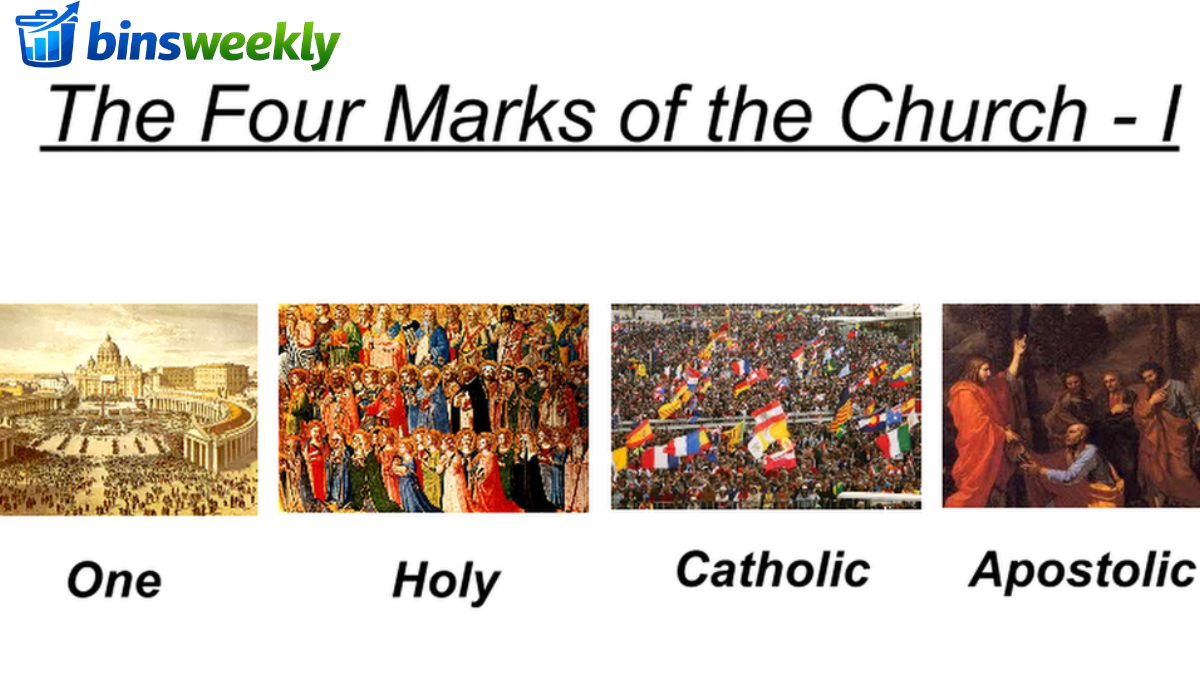
The concept of the 4 marks of the church is one of the most important teachings in Christian theology, helping believers understand what defines the true Church of Jesus Christ. These four marks—One, Holy, Catholic, and Apostolic—are rooted in the early Christian tradition and are clearly expressed in the Nicene Creed. They serve as a spiritual framework that identifies the essential nature, mission, and identity of the Church across centuries. Rather than referring to a building or institution alone, the Church is understood as the global community of believers united in faith in Christ.
The 4 marks of the church are not just historical ideas; they are living principles that continue to guide Christian belief and practice today. They explain how the Church remains united despite cultural and geographical differences, how it is called to live in holiness, how it is universal in mission, and how it stays faithful to the teachings of the apostles. Understanding these marks helps Christians recognize the deeper spiritual identity of the Church and encourages believers to live according to its original mission and purpose.
Historical Background of the 4 Marks of the Church
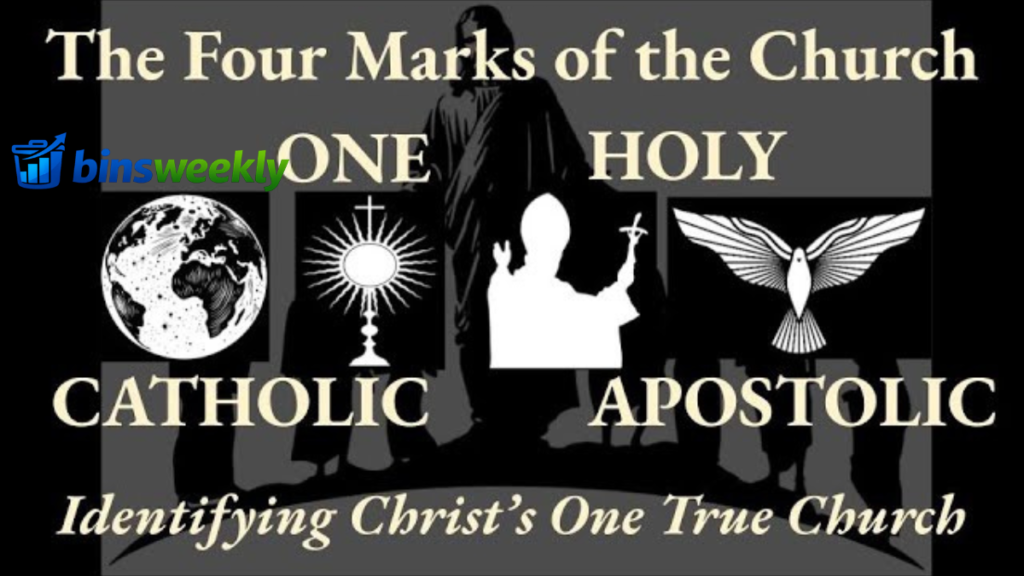
The doctrine of the 4 marks of the church emerged in the early centuries of Christianity when the Church was growing rapidly and facing internal divisions as well as external persecution. To clarify what defined the true Christian community, early Church leaders formalized key beliefs in statements of faith such as the Nicene Creed (AD 325 and later revised in AD 381). This creed clearly states the Church as “one, holy, catholic, and apostolic,” establishing a universal standard for Christian identity.
During this time, various heresies and disagreements challenged the unity of believers, making it necessary to define what the Church truly represents. Church Fathers emphasized that these four marks were not symbolic ideals only but real characteristics of the Church founded by Jesus Christ. Over time, different Christian traditions—Roman Catholic, Eastern Orthodox, and Protestant—have interpreted these marks in slightly different ways, but all agree on their foundational importance. The historical development of these marks shows how early Christians sought to preserve the authenticity and purity of their faith in a rapidly expanding world.
The First Mark: The Church is One (Unity of the Church)
The first mark of the 4 marks of the church is “One,” which emphasizes the unity of all believers in Jesus Christ. This unity is not based on culture, nationality, or human organization but on shared faith in the same Lord and Savior. According to Christian teaching, the Church is considered the “Body of Christ,” meaning all believers are spiritually connected as one living body, even if they are spread across different countries and denominations.
However, this unity does not mean that the Church is free from visible divisions. Over centuries, Christianity has developed multiple traditions and denominations. Despite these differences, the deeper spiritual unity remains intact through shared beliefs in Christ, the Bible, and essential Christian doctrines. The unity of the Church is therefore both spiritual and theological, rather than purely organizational.
Maintaining this unity requires love, humility, and cooperation among believers. Christians are encouraged to focus on common faith rather than divisions, promoting peace and understanding within the global Church community. This unity reflects Christ’s prayer that all His followers “may be one,” making it a central and powerful aspect of Christian identity.
The Second Mark: The Church is Holy (Holiness of the Church)
The second mark of the 4 marks of the church is holiness, meaning that the Church is set apart for God’s purpose. Holiness does not imply that every individual member is sinless, but rather that the Church as a whole is consecrated by Christ and guided by the Holy Spirit. The Church is called to reflect God’s goodness, truth, and moral purity in its teachings and actions.
Through worship, sacraments, prayer, and spiritual discipline, believers are invited to grow in holiness and live according to Christian values. The Church plays a vital role in guiding its members toward spiritual transformation, helping them move away from sin and toward a life that reflects Christ’s example. Even though human imperfection exists within the Church, its mission remains holy because it originates from God.
This mark also highlights the importance of moral responsibility. Christians are encouraged to live righteous lives, practice forgiveness, and seek spiritual growth. The holiness of the Church is not just an abstract idea but a daily calling for believers to become more like Christ in their thoughts, actions, and relationships.
The Third Mark: The Church is Catholic (Universality of the Church)
The third mark of the 4 marks of the church, “Catholic,” means universal rather than referring only to a specific denomination. It expresses the idea that the Church is meant for all people, everywhere in the world, without distinction of race, language, or culture. From its beginning, Christianity has been a global faith, spreading across continents through missionary work and evangelism.
This universality reflects the Great Commission, where Jesus instructed His followers to go and make disciples of all nations. The Church, therefore, is not limited to one region or group but is called to embrace diversity while maintaining unity in faith. Different cultures express Christianity in unique ways, but the core message remains the same: salvation through Jesus Christ.
The catholicity of the Church also emphasizes inclusion and openness. It welcomes people from all backgrounds and seeks to bring them into the family of God. This global nature of the Church shows that the message of Christ is timeless and universal, relevant to every generation and society.
The Fourth Mark: The Church is Apostolic (Apostolic Foundation of the Church)
The fourth mark of the 4 marks of the church is apostolicity, which means that the Church is founded on the teachings and mission of the apostles of Jesus Christ. The apostles were chosen by Christ to spread His message and establish the early Christian communities. The Church continues this mission by preserving their teachings and passing them down through generations.
Apostolic succession plays an important role in this mark, especially in traditions such as Catholic and Orthodox Christianity, where spiritual authority is believed to be handed down from the apostles through bishops. However, all Christian traditions agree that the Bible and apostolic teachings form the foundation of Christian faith and doctrine.
This mark ensures that the Church remains faithful to its original message and does not deviate from the teachings of Christ. It also emphasizes mission and evangelism, encouraging believers to continue spreading the Gospel throughout the world. The apostolic nature of the Church connects modern Christianity directly to its historical roots, preserving its authenticity and spiritual authority.
Conclusion
The 4 marks of the church—One, Holy, Catholic, and Apostolic—form the foundation of Christian identity and belief. They explain what the Church is, what it stands for, and how it continues its mission in the world today. These marks are not only theological concepts but living realities that shape Christian life and practice.
Together, they remind believers of the importance of unity, spiritual purity, global mission, and faithfulness to apostolic teachings. Understanding these marks helps Christians appreciate the deeper purpose of the Church and encourages them to live in harmony with its values. In a divided world, the 4 marks continue to serve as a powerful reminder of what it means to be part of the universal body of Christ.
FAQs
What are the 4 marks of the Church?
They are One, Holy, Catholic (Universal), and Apostolic, describing the essential identity of the Christian Church.
Where do the 4 marks come from?
They originate from the Nicene Creed, an early statement of Christian faith.
Why is the Church called One?
Because it represents spiritual unity among all believers in Christ.
What does Catholic mean in the 4 marks?
It means universal, showing that the Church is for all people worldwide.
What is apostolic succession?
It is the passing of spiritual teaching and authority from the apostles to Church leaders.