

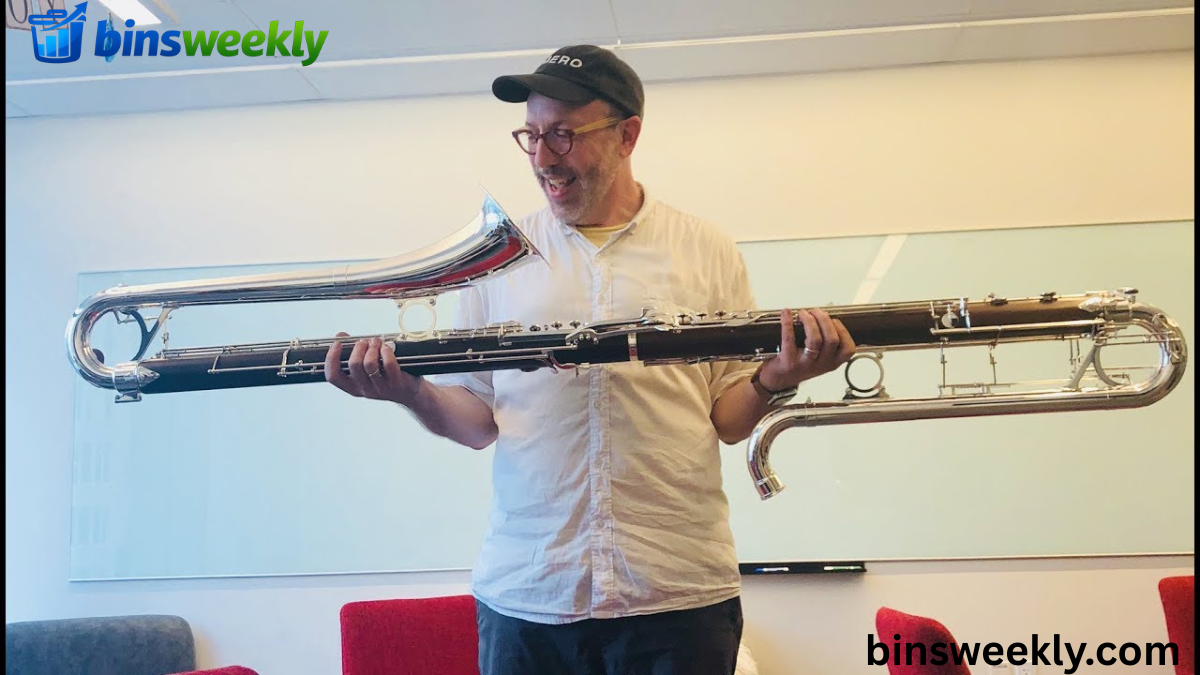
The contrabass clarinet is an extended member of the clarinet family designed to produce some of the lowest pitches in the woodwind section. It is typically pitched in BB♭ and sounds two octaves lower than the standard B♭ clarinet, giving it a deep, thunderous voice. In many ways, the contrabass clarinet functions as the foundation of low woodwind harmonies, reinforcing bass lines in orchestral and ensemble settings.
The physical presence of the contrabass clarinet is equally impressive. Standing several feet tall and often requiring a floor peg for support, it commands attention even before a note is played. Musicians often describe the experience of performing on a contrabass clarinet as both physically demanding and acoustically rewarding. Its sound is not only heard but felt, creating vibrations that add depth to musical arrangements.
In modern music, the contrabass clarinet is valued for its ability to create atmospheric textures. Film composers frequently use it to evoke tension, mystery, or darkness. Although it is not a common solo instrument, its presence in ensembles significantly enriches the overall sonic palette. The contrabass clarinet continues to grow in popularity among avant-garde composers and experimental musicians.
History and Evolution of the Contrabass Clarinet
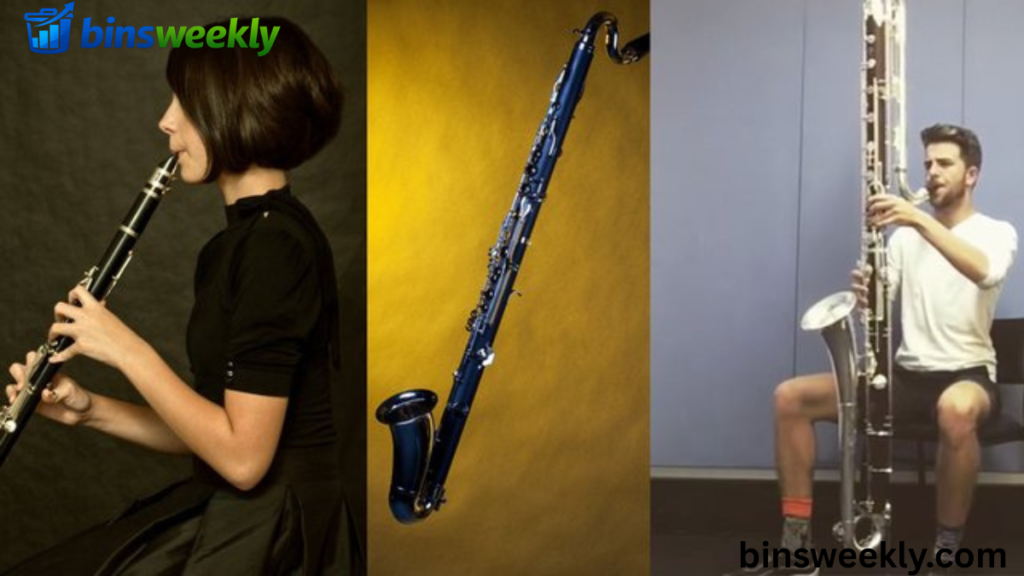
The origins of the contrabass clarinet trace back to the 19th century, a period when instrument makers were actively expanding the range of woodwinds. As orchestras grew larger and composers demanded deeper harmonic support, the need for extremely low-register instruments became apparent. Early prototypes of the contrabass clarinet were experimental and often inconsistent in tuning and construction.
Over time, skilled instrument makers refined its design, improving both intonation and playability. The contrabass clarinet gradually evolved into a more standardized form, particularly in Europe and later in the United States. Innovations in key mechanisms allowed performers to reach its full range more comfortably, although it remained a specialized instrument due to its size and complexity.
In the 20th century, the contrabass clarinet gained recognition in orchestral and military band settings. Composers such as Igor Stravinsky and other modernists began exploring lower tonal registers, which indirectly increased interest in instruments like the contrabass clarinet. Today, manufacturers continue to refine its design using modern materials and ergonomic improvements.
Despite these advancements, the contrabass clarinet remains a niche instrument. Its evolution reflects both technological progress and artistic exploration, making it a symbol of innovation in the woodwind family.
Design, Structure, and Sound Characteristics
The contrabass clarinet is engineered with a long, curved body that often includes metal tubing and a complex key system. Because of its length, the instrument is folded multiple times to make it playable. Its design allows air to travel through an extended acoustic pathway, producing extremely low frequencies.
One of the defining characteristics of the contrabass clarinet is its tone. The sound is deep, rich, and resonant, often described as dark or subterranean. Unlike higher clarinets, the contrabass clarinet produces vibrations that can physically resonate in a performance space. This makes it especially effective in cinematic music and dramatic orchestral passages.
The instrument’s range typically spans several octaves, reaching notes that are lower than many other woodwinds. The contrabass clarinet requires careful control of air pressure and embouchure to maintain clarity in such low registers. Even small changes in breath support can significantly affect tone quality.
In terms of materials, modern contrabass clarinets are often made from metal or composite materials rather than traditional wood. This improves durability and helps manage the instrument’s weight. The design of the contrabass clarinet continues to evolve, balancing acoustic precision with player comfort.
Playing Techniques and Musical Challenges
Playing the contrabass clarinet requires advanced skill and physical endurance. Due to its size, musicians must often stand or use a harness system for support. Breath control is critical, as producing stable low notes demands a consistent and powerful airflow.
Finger technique on the contrabass clarinet is also complex. The extended key system means that players must navigate long mechanical distances between notes. This can make fast passages challenging, requiring precise coordination and strong familiarity with the instrument.
Learning the contrabass clarinet is typically reserved for experienced clarinetists. Many musicians transition from bass clarinet before moving to the contrabass clarinet, as it helps them adapt to lower registers and larger instruments. Despite its challenges, mastering the contrabass clarinet is highly rewarding due to its unique sonic possibilities.
Maintenance is another important aspect. The contrabass clarinet requires regular cleaning to prevent moisture buildup, as well as careful key lubrication to ensure smooth performance. Because of its size, proper storage and transportation are also significant concerns for musicians.
Musical Applications and Modern Usage
The contrabass clarinet plays a specialized but impactful role in modern music. In orchestras, it often doubles bass lines alongside instruments like the contrabassoon or tuba, adding depth and power to the low end. Although not always present in standard orchestration, when included, the contrabass clarinet dramatically enhances the ensemble’s sonic foundation.
In film and media scoring, the contrabass clarinet is especially valued. Composers use it to create suspenseful, eerie, or emotionally intense atmospheres. Its low frequency range makes it ideal for horror, science fiction, and dramatic soundscapes. The contrabass clarinet is also frequently sampled in digital music production.
Contemporary composers continue to explore the expressive capabilities of the contrabass clarinet, writing experimental works that push its boundaries. Extended techniques such as multiphonics, growling, and air sounds are commonly used to expand its expressive range.
Conclusion
The contrabass clarinet stands as one of the most extraordinary instruments in the woodwind family. Its deep tonal range, unique design, and powerful presence make it a valuable tool for composers and performers seeking rich low-frequency sound. Although it is not widely used in mainstream music, the contrabass clarinet continues to influence orchestration, film scoring, and experimental composition. As technology and musical creativity evolve, the contrabass clarinet will likely gain even greater recognition for its unmatched sonic depth.
FAQs
What is a contrabass clarinet used for?
It is used to provide deep bass support in orchestras, bands, and film music.
How big is a contrabass clarinet?
It is extremely large, often standing several feet tall when assembled.
Is the contrabass clarinet hard to play?
Yes, it requires strong breath control and advanced technique.
What does a contrabass clarinet sound like?
It produces a very deep, dark, and resonant tone.
Can beginners play contrabass clarinet?
It is usually recommended for advanced clarinet players.
Where is the contrabass clarinet used most?
It is commonly used in film scores, orchestras, and experimental music.
Why is the contrabass clarinet so rare?
Because it is expensive, large, and used only in specialized musical settings.